
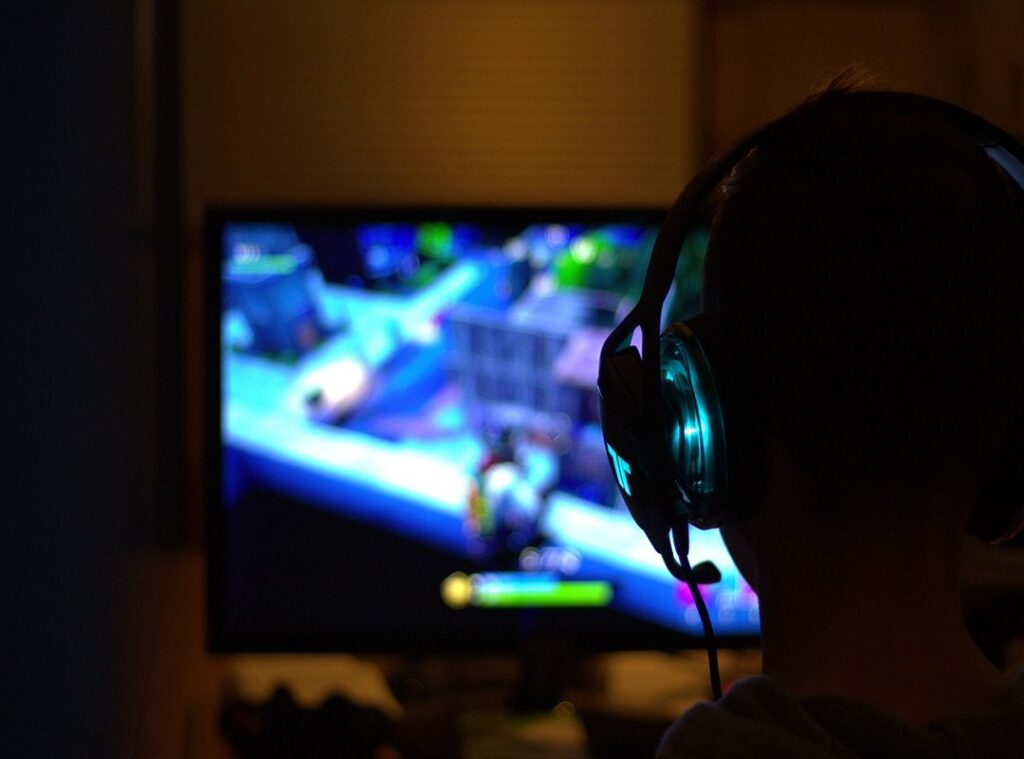
I bought a gaming monitor last year. It had every spec on paper. And it sucked.
You know that feeling when your PC is screaming but your screen holds you back? That lag. That blur.
That weird ghosting in fast turns.
Yeah. It’s not your GPU. It’s the monitor.
Choosing one feels like decoding alien tech. Refresh rate. Response time.
G-Sync. VRR. QHD.
HDMI 2.1. Who decided this needed six acronyms before breakfast?
A good monitor doesn’t just show the game. It changes how the game feels. Faster reactions.
Smoother aim. Less eye strain after three hours.
But you don’t need the most expensive model. You need the right one for your setup. Your GPU.
Your games. Your desk space. Your budget.
This Guide to Gaming Monitors Pmwgamestation cuts through the noise. No jargon without explanation. No specs without context.
Just straight talk about what actually matters.
By the end, you’ll know exactly which monitor fits your rig. And why. No guesswork.
No regrets. Just a screen that finally keeps up.
Screen Size and Resolution: What Actually Matters
I measure my screen diagonally. That’s it. No magic.
Just the corner-to-corner distance in inches.
You’re staring at a spec sheet right now wondering why 27 inches feels different than 32. (Spoiler: it does.)
24-inch screens work for fast-paced esports. They’re cheap and easy on your GPU. 27-inch is the real sweet spot for most people. Big enough to feel immersive, small enough to keep text sharp. 32-inch?
Only if you sit far back. Or you’re okay with pixel hunting.
Resolution means how many tiny dots—pixels. Fit across and down your screen. 1080p is 1920 × 1080. 1440p is 2560 × 1440. 4K is 3840 × 2160. More pixels = sharper image.
Also more work for your graphics card.
You think your RTX 4070 can handle 4K smoothly in Cyberpunk? (It can’t. Not at max settings.)
Budget build or competitive focus? Stick with 1080p. Mid-range PC?
Grab 1440p. It’s where clarity and performance actually meet. Top-tier rig?
Then 4K makes sense. But only if you’re willing to tweak settings.
Want a no-BS breakdown of what fits your setup? The Guide to Gaming Monitors Pmwgamestation cuts through the noise. No fluff.
No jargon. Just real talk about what works. And what doesn’t.
Speed Isn’t Just a Number
I bought a 60Hz monitor in 2018 thinking it was fine. Then I played Apex Legends on a friend’s 144Hz screen. My jaw dropped.
Not because it looked prettier (but) because my aim landed.
Refresh rate is how many times per second the screen redraws itself. Measured in Hz. 60Hz means 60 updates. 144Hz means 144. Simple.
Higher Hz cuts input lag and makes motion feel physical. Not like watching video. You don’t see 144Hz.
You feel it when you flick your wrist and the crosshair snaps where you meant it to go.
Response time is how fast a pixel switches from one color to another. Measured in ms. 1ms is fast. 5ms is okay for casual play. Anything over 8ms?
You’ll notice ghosting in fast turns. (Like that time I missed a headshot because the enemy’s arm blurred across the screen.)
I run 144Hz with 1ms response time now.
Not because I’m pro (I’m) not (but) because anything less feels like running in wet sand.
Aim for at least 144Hz and 5ms or less if you’re serious. Drop to 1ms if you care about split-second reactions.
This is the core of the Guide to Gaming Monitors Pmwgamestation. Not specs on paper, but how they hit your hands and eyes.
You already know if your current screen holds you back.
So why keep pretending it doesn’t?
IPS vs VA vs TN: Which Panel Type Fits Your Setup?

I’ve burned hours staring at all three panel types.
You probably have too.
TN panels move fastest. They’re the go-to for competitive shooters where every millisecond counts. But colors look washed out if you tilt your head (like, literally).
And don’t expect rich blacks or wide viewing angles.
IPS panels show truer colors and hold up from almost any angle. They’re what I reach for when editing photos or watching movies. Response time is slower than TN.
But not so slow that it ruins most games. (Unless you’re chasing 360Hz in Valorant.)
VA panels sit in the middle. Deeper blacks. Better contrast than IPS or TN.
Colors are decent but not studio-grade. Response time? Slower than TN, faster than some IPS (good) for mixed use.
So ask yourself: Do you care more about speed, color, or contrast? If speed wins, grab TN. If immersion matters, go IPS or VA.
Need real-world tips to squeeze more out of your pick? Check out these Hacks for Gaming Pmwgamestation. That’s the Guide to Gaming Monitors Pmwgamestation in action.
Screen Tearing Is Not Okay
Screen tearing happens when your monitor shows parts of two or more frames at once. You see a visible horizontal split (like) the top half of the screen is from one frame and the bottom half is from the next.
It breaks immersion. It makes fast movement look wrong. You notice it right away.
Adaptive sync fixes this. G-Sync and FreeSync both match your monitor’s refresh rate to your GPU’s frame rate in real time.
G-Sync is NVIDIA’s tech. It needs an NVIDIA GPU and usually costs more.
FreeSync is AMD’s. It works with AMD GPUs out of the box (and) many FreeSync monitors now work with NVIDIA cards too (they’re labeled “G-Sync Compatible”).
That compatibility isn’t automatic. You still have to turn it on in NVIDIA Control Panel.
So check your GPU first. If you’ve got NVIDIA, go G-Sync or G-Sync Compatible. If you’ve got AMD, FreeSync is your safest bet.
No point buying a fancy monitor if your card can’t talk to it.
You already know this. If you’re building a rig, you care about smoothness.
Which means you’ll want to pair your GPU with the right monitor from day one.
Need help picking parts? Start with the How to Build a Gaming Pc Pmwgamestation.
Your Monitor Is Waiting
I picked apart every spec so you don’t have to guess.
You stared at terms like “144Hz” and “IPS” and felt lost. That confusion? It’s real.
And it’s exhausting.
I know. Because I’ve been there.
Staring at twenty monitors, second-guessing everything.
Resolution tells you how sharp it looks. Refresh rate tells you how smooth it feels. Response time tells you how much ghosting you’ll hate.
Panel type tells you whether colors pop or wash out. Adaptive sync tells you whether tearing ruins your win.
None of that matters if it doesn’t match your setup. Your GPU can’t push 240Hz at 4K? Don’t buy it.
You play Elden Ring, not CS2? You don’t need 1ms. You’re on a tight budget?
Skip the $800 “gaming flagship.”
Write down your top two needs right now. Not three. Not five.
Two. “Fastest possible for Valorant” or “Rich blacks for Cyberpunk”. Pick one lane.
That list is your filter. It kills noise. It saves money.
It stops decision fatigue.
You came here because you wanted to stop scrolling and start playing.
Guide to Gaming Monitors Pmwgamestation gave you the lens.
Now go look at monitors again. But this time, you’re not guessing. You’re choosing.
Open a new tab. Find one monitor that hits your two priorities. Buy it.
Your better gaming experience isn’t coming someday. It’s coming next week. If you wait, nothing changes.
If you act? Everything does.